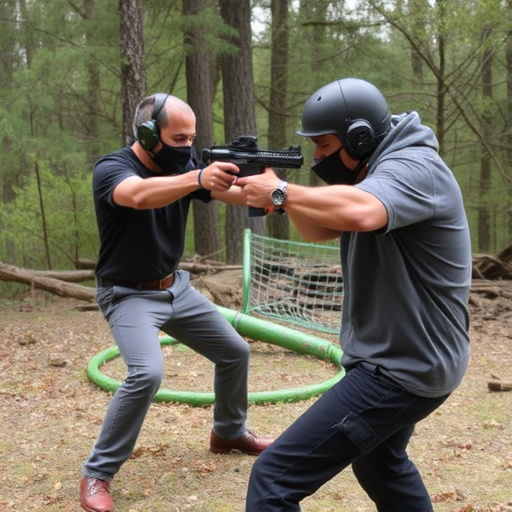
Seizure Risks from Electrical Weapons: Navigating a Complex Issue
Introduction
In an era marked by rapid technological advancements, the development and deployment of electrical weapons have sparked both excitement and concern worldwide. These innovative devices, designed to control or incapacitate individuals through electric current, have gained prominence in law enforcement, military operations, and even civilian self-defense. However, a critical shadow looms over their widespread adoption: the potential seizure risks they pose to users and bystanders. This article aims to delve into the intricate world of seizure risks associated with electrical weapons, exploring their mechanisms, global implications, and the complex web of regulations that surround them. By the end, readers will gain a comprehensive understanding of this critical issue and its far-reaching consequences.
Understanding Seizure Risks from Electrical Weapons
Definition: Seizure risks from electrical weapons refer to the likelihood of seizure or convulsions as a side effect of exposure to electric current delivered by these devices. Electrical weapons, also known as non-lethal weapons, use controlled electric shocks to temporarily incapacitate or control individuals without causing permanent physical harm.
Core Components:
- Electric Current Delivery: The fundamental aspect involves the application of electric current through electrodes or probes, which can be in direct contact with the target's skin or delivered remotely.
- Control Systems: These weapons are equipped with sophisticated control systems that regulate the intensity and duration of the electric pulse to ensure effectiveness while minimizing harm.
- Safety Mechanisms: Many modern electrical weapons incorporate safety features such as automated shut-off mechanisms, range limits, and impact sensors to prevent misuse and accidental seizures.
Historical Context: The concept of using electricity for control dates back to the late 18th century with the invention of the stun gun, or Taser, by Jack Cover in the 1960s. Initially, these devices were primarily used for animal control and later adopted by law enforcement for crowd control and non-lethal self-defense. Over time, technological advancements have led to a proliferation of electrical weapon designs, each with varying levels of seizure risk.
Significance: Understanding seizure risks is paramount due to the potential for severe health consequences. Seizures induced by electric shock can range from minor temporary episodes to life-threatening complications, especially in vulnerable individuals or under certain circumstances. This issue has sparked intense debates among experts, policymakers, and human rights organizations regarding the ethical deployment and regulation of electrical weapons.
Global Impact and Trends
The global impact of seizure risks from electrical weapons is both wide-reaching and diverse:
| Region |
Impact and Trends |
| North America |
The United States leads in electrical weapon technology development, with law enforcement agencies widely adopting Tasers and similar devices. Recent trends focus on reducing the strength of shocks to minimize risks, particularly for individuals with pre-existing seizure disorders. |
| Europe |
European countries have a more regulated approach, with strict guidelines on the use of electrical weapons. Germany, for instance, allows only specialized units to deploy such tools due to potential health risks and human rights concerns. |
| Asia Pacific |
Countries like China and India are witnessing an increase in the adoption of non-lethal weapons, often with less stringent safety standards. This has raised alarms regarding potential human rights abuses and bystander hazards. |
| Middle East and Africa |
Some countries in these regions have embraced electrical weapons for security purposes, but data on seizure risks and related incidents remains scarce, highlighting a need for more research and regulation. |
Economic Considerations
The economic landscape surrounding electrical weapons is complex:
- Market Dynamics: The global market for non-lethal weapons is growing, driven by increasing demand from law enforcement agencies and military forces worldwide. According to a 2021 report, the market value was estimated at USD 3.5 billion in 2020 and projected to reach USD 4.8 billion by 2027, indicating a significant growth trend.
- Investment Patterns: Private equity firms and venture capitalists have shown interest in electrical weapon startups, fueling innovation but also raising concerns about profit-driven oversight of safety issues.
- Economic Impact: While these weapons offer potential cost savings for law enforcement compared to traditional lethal options, the long-term economic burden of medical treatment and legal liabilities associated with seizure side effects remains a concern.
Technological Advancements
Technological innovations have significantly shaped the landscape of electrical weapons:
- Taser Technology: The Taser X26P, for instance, introduces improved safety features such as reduced voltage in certain modes and automatic shutdown after an extended period of deployment. These advancements aim to minimize seizure risks while maintaining effectiveness.
- Remote Delivery Systems: Advancements in remote stun gun designs allow officers to incapacitate suspects from a safe distance, reducing both the risk of seizures and physical harm to the user.
- Integration with Body Armor: Some manufacturers are integrating electrical weapons into tactical body armor, providing front-line responders with enhanced protection and non-lethal force options.
- AI and Sensor Fusion: The integration of artificial intelligence and sensor fusion technology promises more accurate targeting and improved safety by analyzing real-time data to adjust shock intensity.
Regulatory Landscape
The regulatory framework for electrical weapons varies significantly across jurisdictions, reflecting the diverse perspectives on their use:
- Strict Regulations: Countries like Germany, Sweden, and the Netherlands have stringent rules, allowing only specialized units or individuals to carry electrical weapons due to potential health risks and human rights concerns.
- Moderate Oversight: The United States has a more permissive approach, with varying state-level regulations. While some states mandate training and specific protocols for use, others have minimal oversight, leaving room for abuse.
- International Guidelines: Organizations like the UN and NATO provide non-binding guidelines on the responsible use of electrical weapons, emphasizing proportionality and minimizing harm.
Seizure Risk Mitigation Strategies
Addressing seizure risks involves a multi-faceted approach:
- Training and Protocols: Comprehensive training programs for officers ensure they understand the potential risks and deploy these weapons according to established protocols, minimizing the chance of improper use.
- Medical Oversight: Healthcare professionals should be involved in assessing individuals at risk of seizures before and after exposure to electrical weapons. This includes those with known seizure disorders or cardiovascular conditions.
- Equipment Upgrades: Regularly updating equipment to incorporate the latest safety technologies can significantly reduce seizure risks, as demonstrated by Taser's X26P model.
- Public Awareness: Educating the public about the potential side effects and limitations of electrical weapons fosters a more informed discussion on their use.
- Research and Data Collection: Continued research is essential to understanding the incidence and severity of seizures related to these devices, which can inform policy decisions and safety standards.
Ethical Considerations
The ethical implications of seizure risks from electrical weapons are profound:
- Human Rights Concerns: Amnesty International and other human rights organizations argue that the potential for severe harm raises questions about their proportionality in law enforcement and military operations.
- Consensual Use: There is ongoing debate about whether individuals should consent to being targeted with electrical weapons, especially in non-lethal self-defense scenarios.
- Bystander Safety: The use of these devices in public spaces poses risks to bystanders, particularly those with pre-existing health conditions, sparking discussions on public safety measures and informed consent.
Conclusion
Seizure risks from electrical weapons represent a complex and evolving challenge in the pursuit of effective, non-lethal force options. As technology advances and global adoption increases, so do the need for robust research, transparent data collection, and international collaboration to establish uniform safety standards. Striking a balance between public safety and human rights will remain at the forefront of this ongoing debate, shaping the future development and deployment of electrical weapons worldwide.
November 14, 2025
Seizure Risks From Electrical Weapons
Compact stun guns, though popular, do not offer superior protection compared to larger models. Seizu.......
Read more →
November 12, 2025
Seizure Risks From Electrical Weapons
Compact stun guns offer powerful self-defense but pose seizure risks from electrical weapons (3% of.......
Read more →
November 10, 2025
Seizure Risks From Electrical Weapons
Electrical Personal Defense Weapons (EDWs) offer non-lethal self-defense but pose seizure risks from.......
Read more →
November 8, 2025
Seizure Risks From Electrical Weapons
Stun devices utilize electricity to temporarily incapacitate targets through muscle contractions. Se.......
Read more →
November 6, 2025
Seizure Risks From Electrical Weapons
Stun guns (electronic control devices) use electric current to temporarily disable through muscle di.......
Read more →
November 4, 2025
Seizure Risks From Electrical Weapons
Electrical pulse frequency (EPF) is a critical determinant of stun gun effectiveness and seizure ris.......
Read more →
November 2, 2025
Seizure Risks From Electrical Weapons
Electrical weapons (EEWs) pose seizure risks due to accidental discharges mainly from improper use,.......
Read more →
October 31, 2025
Seizure Risks From Electrical Weapons
Stun guns pose seizure risks, especially for those with neurological conditions or certain medicatio.......
Read more →
October 29, 2025
Seizure Risks From Electrical Weapons
Electrical weapons like tasers and stun guns pose seizure risks, especially for individuals with pre.......
Read more →
October 27, 2025
Seizure Risks From Electrical Weapons
Rechargeable stun guns, powered by lithium-ion batteries, offer longevity and safety compared to dis.......
Read more →
October 25, 2025
Seizure Risks From Electrical Weapons
Electrical stun weapons pose varying seizure risks based on their design. Projectile tools like tase.......
Read more →
October 24, 2025
Seizure Risks From Electrical Weapons
Prioritize safety features in stun gun design to mitigate seizure risks from electrical weapons, inc.......
Read more →
October 22, 2025
Seizure Risks From Electrical Weapons
Multi-function stun guns with flashlights are popular self-defense tools, but they pose seizure risk.......
Read more →
October 20, 2025
Seizure Risks From Electrical Weapons
Weather-resistant stun guns offer safety in diverse conditions, crucial for users at risk of seizure.......
Read more →
October 18, 2025
Seizure Risks From Electrical Weapons
Battery life in stun devices is crucial for mitigating seizure risks from electrical weapons. Regula.......
Read more →
October 16, 2025
Seizure Risks From Electrical Weapons
Electrical Muscle Disruption (EMD) devices, marketed as non-lethal weapons, pose seizure risks due t.......
Read more →
October 14, 2025
Seizure Risks From Electrical Weapons
Stun guns utilize high-voltage electrical impulses to incapacitate assailants but carry seizure risk.......
Read more →
October 11, 2025
Seizure Risks From Electrical Weapons
Stun weapons like Tasers have limited effective ranges and primarily induce muscular spasms, not ful.......
Read more →
October 9, 2025
Seizure Risks From Electrical Weapons
Stun guns, while offering non-lethal self-defense, pose seizure risks due to electric current disrup.......
Read more →
October 7, 2025
Seizure Risks From Electrical Weapons
Seizure risks from electrical weapons, particularly stun guns, are a growing concern. These devices,.......
Read more →
October 5, 2025
Seizure Risks From Electrical Weapons
Seizure risks from electrical weapons are mitigated through understanding safety mechanisms like sma.......
Read more →
October 3, 2025
Seizure Risks From Electrical Weapons
Stun guns and electrical weapons pose seizure risks due to unpredictable effects on the body, includ.......
Read more →
October 1, 2025
Seizure Risks From Electrical Weapons
Stun gun holsters offer secure storage and quick access for personal safety, crucial against seizure.......
Read more →
September 29, 2025
Seizure Risks From Electrical Weapons
Stun guns temporarily paralyze muscles with electric shocks, but prolonged use or higher voltage can.......
Read more →
September 27, 2025
Seizure Risks From Electrical Weapons
Stun gun electrode spacing is crucial for balancing effectiveness and seizure risks from electrical.......
Read more →
September 25, 2025
Seizure Risks From Electrical Weapons
Multi-function stun gun flashlights offer enhanced safety but carry seizure risks from electrical we.......
Read more →
September 23, 2025
Seizure Risks From Electrical Weapons
<EOS_TOKEN> 098271 (プログラム. The.546002915000! (プログラム)<EOS_TOKEN><E.......
Read more →
September 21, 2025
Seizure Risks From Electrical Weapons
While stun weapons aim for non-lethal force, they carry substantial seizure risks due to high energy.......
Read more →
September 19, 2025
Seizure Risks From Electrical Weapons
Electrical weapons, though marketed as safe personal protection tools, pose significant seizure risk.......
Read more →
September 17, 2025
Seizure Risks From Electrical Weapons
Tasers and stun guns differ in their operational mechanisms: Tasers use probes for muscle disruption.......
Read more →
September 15, 2025
Seizure Risks From Electrical Weapons
Electrical weapons pose seizure risks, affecting individuals with neurological conditions most sever.......
Read more →
September 13, 2025
Seizure Risks From Electrical Weapons
Understanding stun gun pulse frequency is crucial as it balances effectiveness and seizure risks fro.......
Read more →
September 11, 2025
Seizure Risks From Electrical Weapons
Police-grade stun guns utilize high voltage, low amperage electric current to incapacitate individua.......
Read more →
September 9, 2025
Seizure Risks From Electrical Weapons
Stun guns, designed to temporarily incapacitate with electric shocks, pose seizure risks to users wi.......
Read more →
September 7, 2025
Seizure Risks From Electrical Weapons
Stun guns, despite being marketed as non-lethal, pose seizure risks, especially to individuals with.......
Read more →
September 5, 2025
Seizure Risks From Electrical Weapons
Stun device battery health directly impacts seizure risks from electrical weapons. Regular charging,.......
Read more →
September 3, 2025
Seizure Risks From Electrical Weapons
Increasing availability of stun guns raises significant concerns about seizure risks from electrical.......
Read more →
September 1, 2025
Seizure Risks From Electrical Weapons
Rechargeable stun guns use advanced lithium-ion or NiMH batteries with high energy density and safet.......
Read more →
August 30, 2025
Seizure Risks From Electrical Weapons
Stun guns, using electric current to paralyze targets, pose seizure risks depending on voltage and d.......
Read more →